Metal roofs: types, pros and cons and how to choose
Types of metal roof, their pros and cons, metal versus clay tiles, noise and condensation, solar panels and snow – what to know before you choose.
 Ivan Dyulgerski, architectPublished Updated 5 min read
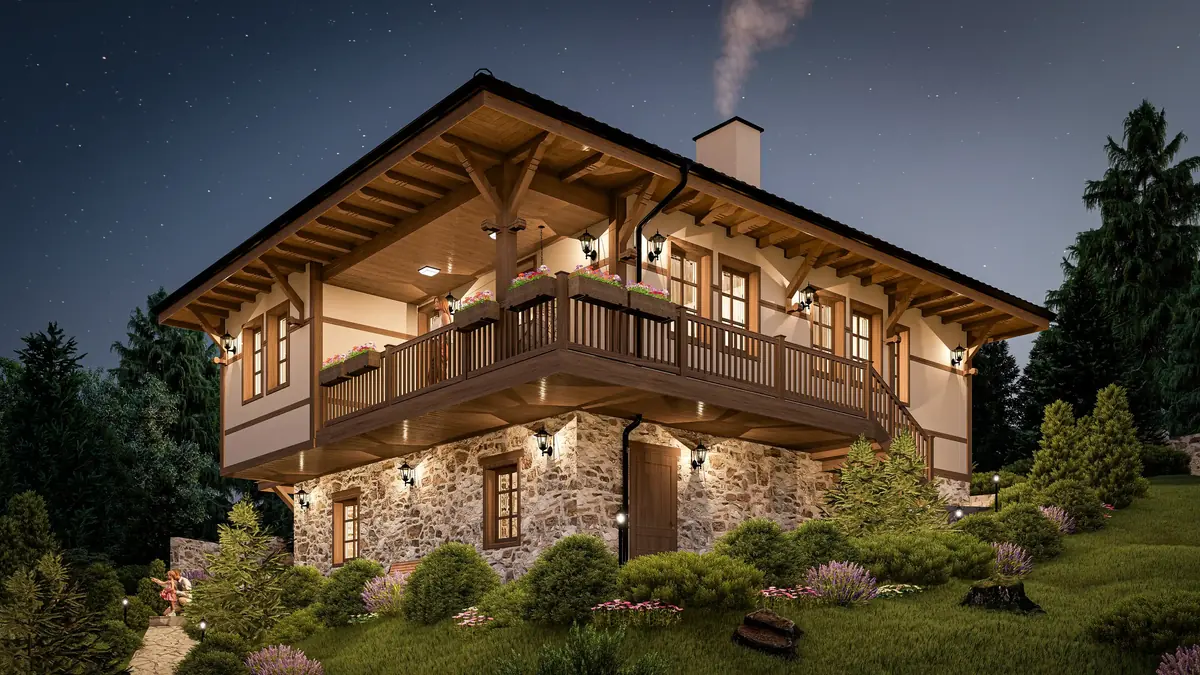
A metal roof is no longer just the corrugated sheet on a village shed. The fine seam lines of a modern house, tile-profile sheets that from a distance are indistinguishable from classic tiles, the copper domes of historic buildings – all of these are metal roofs. They are light, durable and give architecture a great deal of freedom, but they also call for a well-thought-out design.
Here we look at the types of metal roof available, when they are a better choice than tiles, how to avoid noise and condensation, and how to approach the job step by step if you are considering a new roof or replacing an old one.
What are metal roofs and what types are there?
A metal roof is a roof covering of metal sheets or elements fixed onto a timber or steel structure; standing seam, tile-profile and trapezoidal sheeting are the most widely used.
Main types by form
- Standing seam roof – long panels joined by raised seams. A clean, linear look favoured in modern architecture; it also allows shallower roof pitches.
- Tile-profile sheeting – sheets pressed to look like rows of tiles. Suitable for traditional houses when a lighter covering is wanted.
- Trapezoidal sheeting – an economical, quick solution for carports, garages, agricultural and industrial buildings.
- Metal tiles and shingles – smaller elements, often with a stone-chip finish, that imitate traditional coverings.
Main materials
- Coated steel – galvanised steel with a polymer coating in a range of colours; the most widespread and affordable option.
- Aluminium – light and corrosion-resistant, suitable near the sea.
- Titanium zinc – develops a natural matt patina over time; used for standing seam roofs and façades.
- Copper – the longest-lasting and most expensive option; it gradually darkens and eventually turns green.
What are the pros and cons of a metal roof?
A metal roof wins on low weight, long life and little maintenance, and loses mainly on noise and on the demands it places on detailing if the design is poor.
Pros
- Light – puts less load on the roof structure; convenient when renovating old houses.
- Durable – does not rot or crack and is not affected by moss as some other coverings are.
- Non-combustible – the metal itself does not burn.
- Snow slides off – less build-up, but snow guards are needed.
- Quick to install – large sheets cover a big area fast.
- Recyclable – the metal can be reused at the end of its life.
- Architectural freedom – allows low pitches, curved forms and roofs that continue down as a façade.
Cons
- Noise from rain and hail if there is no suitable substrate and insulation beneath the sheets.
- A risk of condensation if the roof build-up is not executed correctly.
- Thermal movement – metal expands and contracts, so the fixings must allow for it.
- Dents – thin sheets can deform in heavy hail or if walked on incorrectly.
- A higher price for standing seam roofs and premium metals.
Metal roof or clay tiles – which is better?
There is no universal winner: metal is lighter and allows more modern forms, while tiles are quieter, heavier and often better suited to a traditional setting.
- Weight – metal is many times lighter; tiles require a more substantial structure.
- Pitch – a standing seam roof works at lower pitches; tiles need a steeper roof.
- Acoustics – tiles are naturally quieter; metal relies on a correctly built roof build-up.
- Appearance – metal is favoured for contemporary architecture, tiles for classic and traditional Bulgarian styles.
- Repair – a broken tile is easy to replace; a damaged metal sheet takes more work.
Before deciding, check whether planning rules for your property restrict the type and colour of the roof covering – such rules exist in some historic parts of Bulgarian towns and villages and in protected areas.
Is a metal roof noisy, and how do you avoid condensation?
A properly built metal roof on a house is no noisier than other coverings, because noise and condensation are solved by the same well-designed roof build-up.
Standing seam roofs are usually laid on solid timber boarding, with insulation between the rafters below. Together they absorb the sound of rain. A separating layer or breathable membrane is laid between the metal and the boarding to carry away water vapour. A ventilated gap beneath the covering removes moisture before it can condense on the cold metal. On the warm side of the insulation, a vapour control layer stops moisture from the living space reaching the roof.
The most common problems with metal roofs in Bulgaria come from layers that were left out to save money – sheeting fixed directly onto battens, without a membrane or ventilation, above a heated attic.
Is a metal roof suitable for solar panels and mountain areas?
Yes – a metal roof is one of the most convenient bases for photovoltaic panels, and in the mountains it performs well if protection against sliding snow is provided.
On standing seam roofs the panels are attached with clamps that grip the seams themselves, without piercing the covering. On other profiles, special fixings with seals are used. In Bulgarian mountain resorts such as Bansko, Chepelare or Borovets, heavy snowfall makes snow guards essential above entrances, terraces and parking spaces, and the roof structure must be designed for the local snow load.
How do you choose and install a metal roof, step by step?
The safest route is to resolve the roof in the design rather than pick it from a catalogue at the last minute.
- Assess the structure – when replacing a roof, check the condition of the rafters and whether repairs are needed.
- Choose the type and material to suit the style of the house, the pitch and the budget.
- Design the roof build-up – boarding, membrane, ventilation, insulation and vapour control layer.
- Plan the drainage – gutters, downpipes and the details around chimneys and dormers.
- Provide snow guards and safety fixings for maintenance and cleaning.
- Find out whether municipal approval is required in your case.
- Choose an installer with experience of the specific system and ask for a warranty on both material and workmanship.
Our approach at DARCH Projects
In house design and energy retrofit projects we treat the roof as a complete system – form, material, insulation and details. Using 3D visualisation, we show how different coverings and colours will look on your house before the first sheet is ordered.
Frequently asked questions
How long does a metal roof last?
A well-installed metal roof lasts for decades, with its lifespan depending on the material and coating. Steel with a quality polymer coating is long-lasting, while titanium zinc and copper are among the most durable roofing materials of all. Correct installation, ventilation and drainage matter just as much, because most problems come from the details rather than the metal itself.
Metal roof or clay tiles – which is cheaper?
Trapezoidal and tile-profile sheeting are usually among the more affordable coverings, whereas standing seam roofs and premium metals such as titanium zinc and copper cost more than tiles. The final price also depends on the structure, insulation, the complexity of the roof and its details. It is therefore best to compare quotes based on the same design.
Is a metal roof noisy in the rain?
A metal roof is noisy when the sheets are fixed directly onto battens without boarding or insulation. With a properly designed build-up – timber boarding, a separating membrane and insulation between the rafters – rain noise in the living spaces is similar to that under other coverings. Over an open carport or garage, the sound naturally remains louder.
Can solar panels be installed on a metal roof?
Yes, metal roofs are very well suited to photovoltaic panels. On standing seam roofs the panels are fixed with special seam clamps, without piercing the covering. On profiled sheeting, fixings with seals are used. Before installation it is wise to check the load-bearing capacity of the structure and the panels’ position relative to the sun.
Want this for your home?
We will talk through what suits your property, budget and way of life.