Minimalist lifestyle: how to start at home
What minimalism is, its pros and cons, and how to declutter and organise your home step by step. Advice on minimalist interiors from architects.
 Ivan Dyulgerski, architectPublished Updated 5 min read
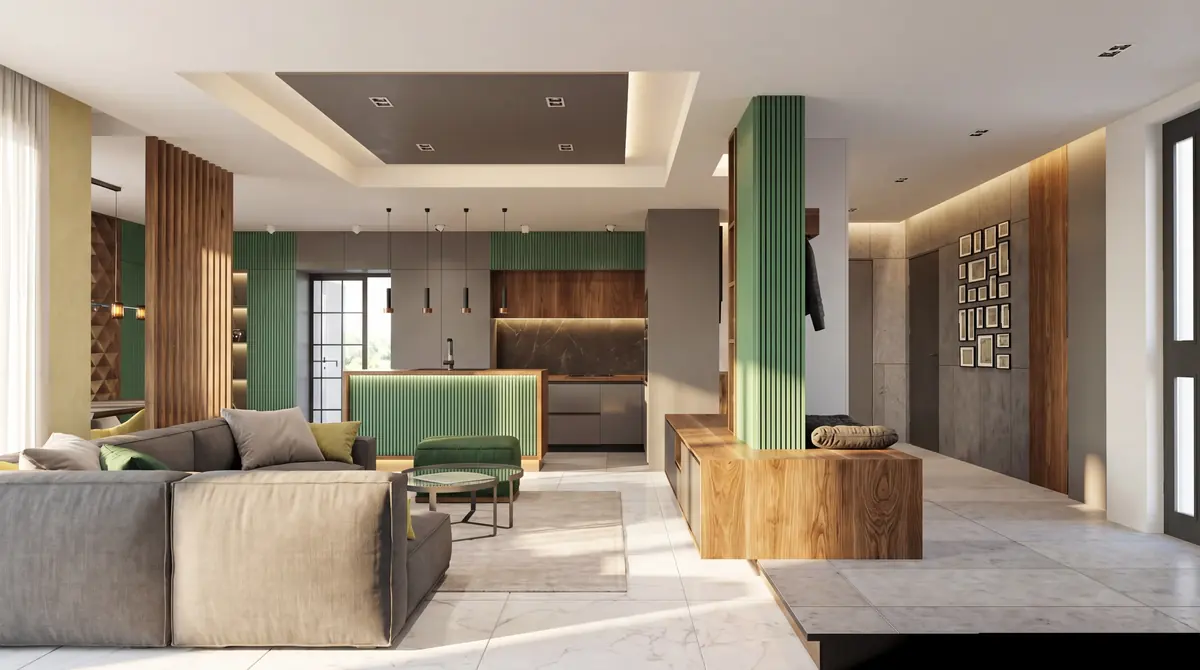
Minimalism is often mistaken for empty white rooms and austerity. In fact it is about something simpler: keeping around us what we use and love, and freeing up space – literally and in our minds – from the rest.
For an architect, minimalism is also a question of space. A well-organised 70-square-metre apartment can feel more spacious than a cluttered house, and that starts not in the furniture shop but with decisions about what stays and where it is stored.
What is a minimalist lifestyle?
A minimalist lifestyle is a conscious choice to own fewer things and to focus on quality, experiences and relationships rather than the quantity of possessions. It is not a rule about an exact number of objects, but a way of thinking in which every purchase has to pass the question “do I really need this?”.
In architecture and design the idea has a long history. Mies van der Rohe made the phrase “less is more” famous, and architects such as Tadao Ando and John Pawson are known for calm spaces in which light, material and proportion do all the work.
What are the pros and cons of minimalism?
The pros are more order, lower spending and an easier home to maintain; the cons come mainly from extremes and hasty throwing out.
Pros
- Less time cleaning and tidying – when everything has its place, the home almost looks after itself.
- More sensible spending – you buy fewer but longer-lasting things.
- Less waste – lower consumption also means less rubbish and packaging.
- More calm – many people say a visually ordered space helps them concentrate and rest.
- A greater sense of space – especially valuable in typical Bulgarian apartments, where rooms tend to be smaller.
Cons
- Risk of a cold interior – without texture, warm materials and personal objects, a home can look like a hotel room.
- Throwing out things you need – excessive enthusiasm sometimes leads to buying them again.
- Different attitudes within the family – if only one person wants the change, tension is guaranteed.
- Higher initial cost – quality furniture and built-in storage cost more than quick purchases.
How do you start with minimalism at home, step by step?
It is best to start gradually, room by room, and leave decisions on furniture and renovation until last, once you know how many things you actually live with.
- Take stock of your possessions. Start with one category – clothes or books, for example – and bring everything together in one place.
- Divide it into three groups. I use it, I love it, I don't need it. The third group is donated, sold or recycled.
- Give everything a place. Things without a permanent home are the ones that create chaos.
- Reduce visible surfaces. Worktops, shelves and cabinet tops stay almost empty; everyday items are put away.
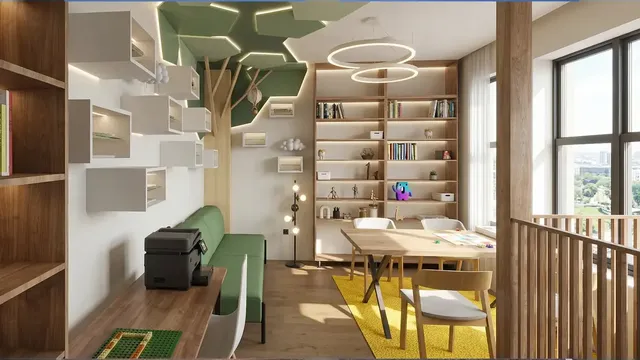
- Consider built-in storage. Floor-to-ceiling wardrobes, niches and handleless cabinets hold far more than freestanding furniture.
- Choose a few pieces of quality furniture. Every piece should have a clear function, and some more than one.
- Set a rule for new purchases. For example: when something new comes in, something old goes out.
What does a minimalist interior look like?
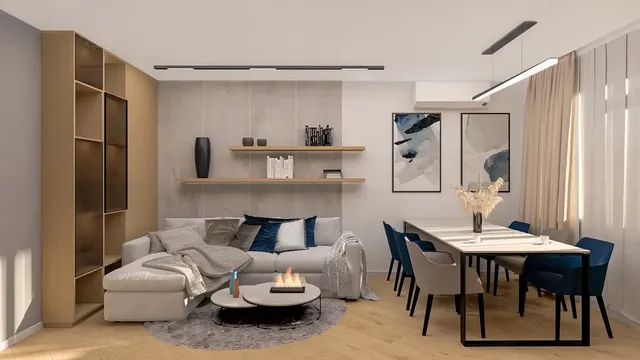
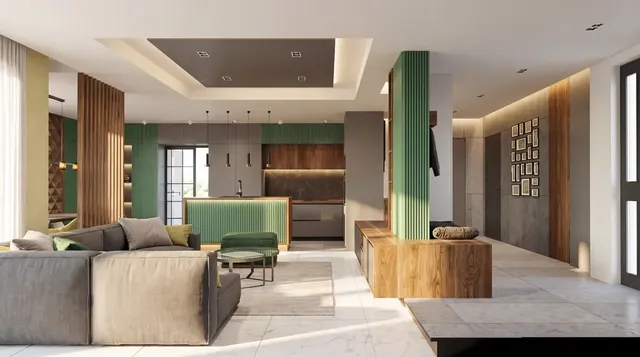
A minimalist interior is recognisable by clean lines, a restricted colour palette, few objects and close attention to light and materials.
- Colours: a neutral base – white, warm grey, beige – with one or two accents.
- Materials: wood, stone, linen, microcement; natural textures make the space cosy rather than sterile.
- Concealed storage: flat fronts, push-to-open cabinets, integrated kitchen appliances.
- Light: more natural light, simple curtains, layered lighting instead of a single chandelier.
- Detail: concealed services, straight edges, precise junctions between materials. In minimalism there is nowhere to hide careless workmanship.
This is exactly why a minimalist interior requires more design, not less: the fewer things in a room, the more visible its proportions and details become.
Minimalism in a typical Bulgarian apartment
In many Bulgarian homes the biggest challenges are the few built-in cupboards, narrow corridors and glazed balconies turned into storerooms. Here the minimalist approach starts with reorganising the layout: a wall of wardrobes in the hallway, a walk-in store instead of an extra chest of drawers in the bedroom, a kitchen with cabinets up to the ceiling and a balcony that once again serves for relaxing. Often one well-planned storage wall frees up more space than several new pieces of furniture. When belongings have a place, the interior can be calm without being empty.
Who are the best-known names in minimalism?
The idea went mainstream thanks to a few authors and advocates whose books and websites are easy to find:
- Marie Kondo – a Japanese organising consultant and creator of the KonMari method, in which you keep only the things that “spark joy”.
- The Minimalists – Joshua Fields Millburn and Ryan Nicodemus, authors of books, a podcast and documentaries about living with less.
- Leo Babauta – author of the Zen Habits blog on simple habits and mindful living.
- Joshua Becker – founder of Becoming Minimalist.
- Courtney Carver – author of Be More with Less and of the Project 333 challenge for a minimalist wardrobe.
How do you deal with the difficulties?
The three most common obstacles are emotional attachment to belongings, disagreement within the family and pressure from others – and each has an approach that works.
- Emotional attachment: start with the easy categories and leave keepsakes – photos, letters, gifts – until last. One beautiful memory box is a better solution than a full storeroom.
- The family: start with your own things and with shared spaces where there is agreement. Example persuades more than argument.
- Social pressure: minimalism is not a competition; what matters is that your home works for you, not that it impresses guests.
How we help at DARCH Projects
When we design an interior, we start with the way you live and only then turn to the furniture. We plan built-in storage, concealed services and a calm palette of materials, and with 3D visualisations we show you how the home will look before the renovation begins. You can find out more on our interior design page, and see examples in our portfolio.
Frequently asked questions
What does it mean to be a minimalist?
Being a minimalist means consciously owning fewer things and choosing carefully what comes into your home. The goal is not a set number of objects or empty rooms, but more time, money and calm for the things you value. A minimalist buys less often, prefers quality over quantity and keeps around them what they use or genuinely love.
Where should I start if I want a minimalist home?
Start with one category of belongings, not the whole house. Clothes or the kitchen are a convenient starting point because decisions come quickly. Divide things into used, loved and unnecessary, find a permanent place for everything that stays, and only then think about new furniture or a renovation. That way you will know how much storage you actually need.
How can a minimalist interior avoid looking cold?
Use natural materials with texture – wood, stone, linen, wool – and warm shades within the neutral palette. Add plants and a few personal objects that mean something to you. Lighting matters too: several sources of warm light at different levels create a sense of comfort. Minimalism is about order and calm, not a lack of character.
Is a minimalist interior more expensive?
The initial cost is often higher, because a minimalist interior relies on built-in furniture, quality materials and precise workmanship where mistakes cannot be hidden. In return you buy fewer things and they last longer. The most sensible approach is to direct the budget towards storage and the materials you use every day, rather than towards decoration.
Want this for your home?
We will talk through what suits your property, budget and way of life.