Green cities: what they are, their benefits and how they are created
What makes a green city, its benefits for people and the economy, examples such as Copenhagen and Freiburg, and practical steps for Bulgarian cities today.
 Ivan Dyulgerski, architectPublished Updated 5 min read
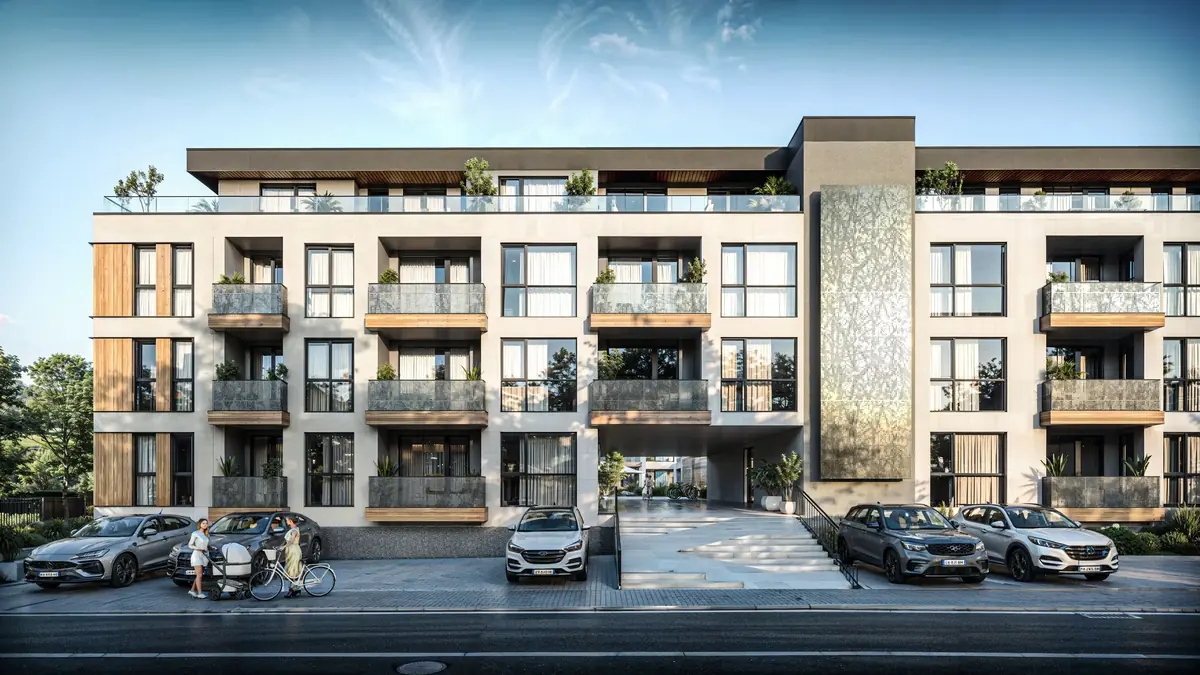
When people talk about green cities, many picture more trees along the streets. Trees are indeed important, but a green city is much more than planting – it is a way of planning, building and maintaining a city so that it uses fewer resources and is more pleasant to live in.
For Sofia and every large Bulgarian city, the subject is entirely practical: hot summer days, polluted winter air, traffic congestion and the lack of shade on pavements are problems that good architecture and urban planning can ease. Here is what lies behind the term and how to get from an idea to a real result.
What is a green city?
A green city is an urban environment in which decisions about buildings, transport, energy, water and public spaces are made with the environment and people's health in mind. The aim is not a single standalone eco project, but a complete system in which the individual parts work together.
In practice, this means several things at once:
- Green infrastructure – parks, gardens, riverside walks and green corridors that link neighbourhoods to one another.
- Efficient buildings – well insulated, with correctly oriented windows, shading and, where sensible, renewable energy.
- Sustainable mobility – convenient public transport, safe cycle lanes and pavements that are genuinely pleasant to walk along.
- Care for water – rainwater is retained and used rather than simply drained into the sewers.
- Short distances – school, shops, park and transport stop all within walking distance of home.
What are the benefits of green cities?
The benefits are of three kinds – environmental, economic and for people's everyday lives – and they usually reinforce one another.
For the environment
Burning less fuel for heating, cooling and transport means fewer emissions and cleaner air. Green spaces support biodiversity and help the soil absorb rain, reducing the risk of flooding during heavy downpours.
For the economy
Energy-efficient buildings have lower bills and lower maintenance costs throughout their life. A pleasant urban environment attracts residents, visitors and businesses, and the green sector – from construction to park maintenance – creates jobs.
For people
Shade from trees makes summer streets bearable, the park next to the apartment block becomes a meeting place, and quieter, safer streets encourage walking and cycling. A good city provides equal access to these amenities in every neighbourhood, not just in the centre.
Which cities around the world set an example of green development?
There is no perfect green city, but some places have become bywords for particular good practices:
- Copenhagen, Denmark – known for its cycling infrastructure, which makes the bicycle a normal way of getting around for people of all ages.
- Singapore – systematically weaves vegetation into its dense urban fabric: green roofs, planted terraces and parks such as Gardens by the Bay.
- Freiburg, Germany – the Vauban district is a frequently cited example of a residential area planned around public transport, cycling and energy-efficient houses.
- Stockholm, Sweden – the Hammarby Sjöstad district was built on the site of a former industrial area with a shared system for energy, water and waste.
- Portland, USA – known for limiting urban sprawl, investing in public transport and urban agriculture.
What they share is not a particular technology but long-term consistency: decisions are taken in the same direction over decades.
How is a green city created, step by step?
A green city begins with a sound diagnosis and a clear plan, not with individual eye-catching projects. The logic applies equally to a whole city, a new district or a large investment project.
- Analyse the current situation. Green spaces, traffic flows, heat islands, flood-risk areas and the condition of the building stock are mapped.
- Draw up a strategic plan with specific targets. What will be improved, by when, and how progress will be measured.
- Make green infrastructure the backbone. The links between parks, rivers and streets come first; individual buildings come after.
- Build efficiently and upgrade existing buildings. New construction is designed for low energy use, and old apartment blocks are retrofitted.
- Involve people. Residents know their neighbourhood best; public consultation often prevents costly mistakes.
- Monitor and adjust. Results are tracked and the plan is adapted to reality.
What can be done in Bulgaria today?
Many of the steps towards a greener city are within reach of individual owners, apartment-building owners' associations and investors, without waiting for a large municipal programme.
- Retrofitting apartment blocks – insulation and new windows reduce bills and improve comfort. This is perhaps the greatest potential in Bulgarian cities.
- Green roofs and terraces – suitable for new buildings and for some existing ones, after checking the load-bearing capacity and waterproofing.
- Shading south- and west-facing façades – external blinds, canopies and planted pergolas against summer overheating.
- Courtyards that absorb water – more grass and permeable paving instead of fully concreted surfaces.
- Bicycle parking – convenient, secure cycle storage in new residential buildings.
What are the main challenges?
The most common obstacles are money, regulations and public trust – and all three can be overcome with good planning.
- Funding: green solutions often cost more upfront and pay for themselves over time. That is why costs should be compared over the whole life of the building, not just at construction. Blended funding – public, private and from European programmes – helps.
- Regulations: every solution must comply with the planning rules in force; a good architect knows the framework and looks for the opportunities within it.
- Public consent: changes such as fewer parking spaces or new cycle lanes provoke debate. Clear communication and visualising the result make the conversation much easier.
Our approach at DARCH Projects
In our architecture studio we think of a building as part of its neighbourhood: orientation, shade, planting, rainwater and energy efficiency are resolved at the concept stage. We help with the architectural design of new buildings and with energy retrofit designs for existing ones, and we use 3D visualisations to show how the environment will look before it is built.
Frequently asked questions
What is a green city, in simple terms?
A green city is one planned to use less energy and fewer resources and to be healthier for its residents. It has enough parks and trees, its buildings are energy efficient, getting around on foot, by bicycle and by public transport is convenient, and water and waste are managed sensibly. The idea is that all these parts work together as one system.
Which is the greenest city in the world?
There is no official, universally accepted ranking, because cities are assessed against different criteria. Copenhagen is often cited for its cycling infrastructure, Singapore for integrating vegetation into buildings, and Stockholm and Freiburg for whole districts planned sustainably. Each is strong in a different area, so it is more useful to look for specific good practices.
How can an ordinary apartment block become greener?
Energy retrofitting has the greatest effect: insulating the façade and roof and replacing the windows. Next come shading on the south and west façades, greening the courtyard with more permeable paving, bicycle parking and, if the structure allows, a green roof or solar panels. Every measure must be designed and approved in line with the regulations in force.
Is it expensive to build sustainably?
Some measures, such as better insulation or higher-quality windows, raise the initial cost but cut bills and maintenance for decades to come. Others, such as correct orientation of the building, natural ventilation and shading, cost almost nothing extra if they are resolved in the design. That is why the most cost-effective moment for sustainable solutions is the design stage, not construction.
Want this for your home?
We will talk through what suits your property, budget and way of life.