Striking architecture with budget materials: how it is done
Which cheap and reclaimed materials look good, how to save without compromising quality and which famous buildings prove a budget is no obstacle.
 Ivan Dyulgerski, architectPublished Updated 5 min read
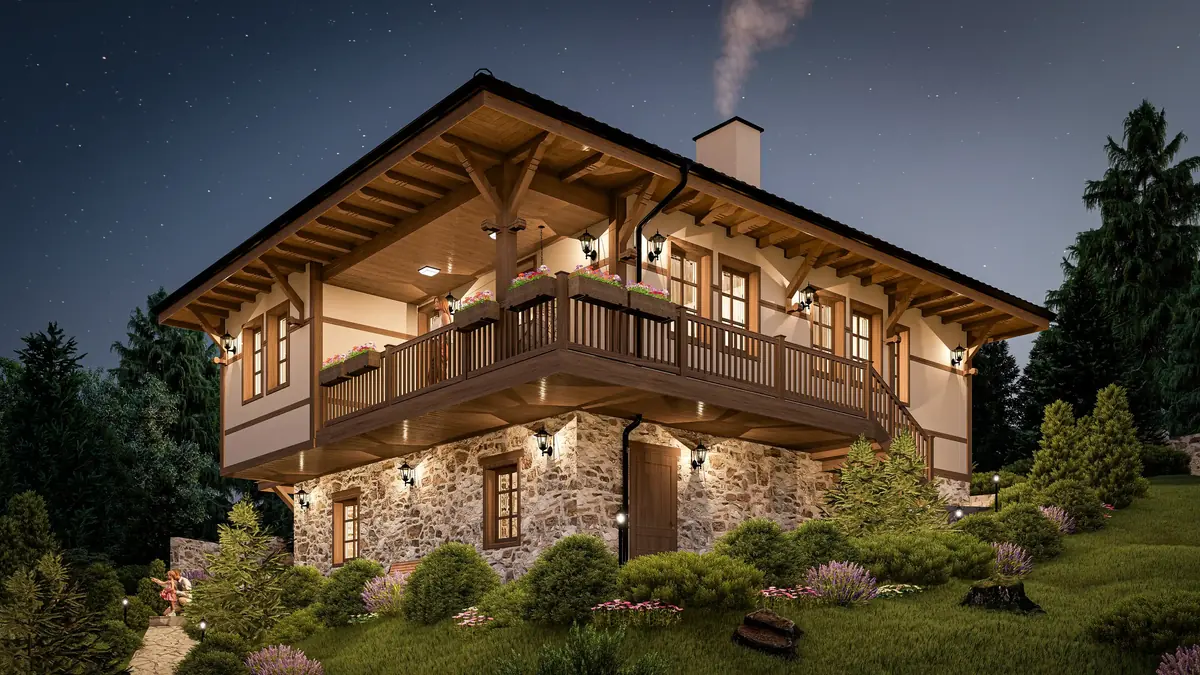
One of the most persistent myths in construction is that a beautiful building must be expensive. The history of architecture shows the opposite: some of the most admired buildings of recent decades are made from ordinary, even cheap materials – simply used intelligently.
The secret rarely lies in the material itself. It lies in proportion, light and detail, and in deciding where to save and where never to. Here is how to approach it if you are building a house or holiday home, or renovating an apartment on a limited budget.
Which budget materials look good?
The materials that look good are those shown honestly and in good proportions – concrete, brick, timber, polycarbonate and metal – without imitating something more expensive.
Reclaimed and local timber
Old beams and boards from old roofs or barns have a patina that new material cannot offer. They suit cladding, ceilings, stairs and furniture. They must be checked for moisture, rot and pests and treated appropriately.
Brick – new or reclaimed
Exposed brickwork is structure, cladding and decoration all at once. Reclaimed bricks from demolished buildings bring history and texture. The Chinese architect Wang Shu, a Pritzker Prize laureate, is known precisely for using old bricks and tiles salvaged from demolished buildings, for example at the Ningbo History Museum.
Concrete
Fair-faced concrete needs no plaster or paint. With good formwork it becomes the building’s main aesthetic. It demands careful execution – mistakes in it cannot be hidden.
Polycarbonate, OSB and industrial materials
Materials made for warehouses and greenhouses can look surprisingly refined. The French practice Lacaton & Vassal, also a Pritzker winner, is known for using greenhouse systems and polycarbonate to give residents more space for the same money.
Shipping containers
Containers are a ready-made steel structure and are popular for studios, guest houses and temporary buildings. They need substantial insulation, because steel is cold in winter and hot in summer – something that is keenly felt in the Bulgarian climate.
Where can you save and where should you not?
Save on surfaces and decoration; do not save on the structure, waterproofing, insulation or windows. A brief comparison:
- Where you can save: cladding (fair-faced concrete or brick instead of stone), floor finishes (polished concrete, OSB, linoleum), light fittings, furniture at a later stage, landscaping that matures over the years.
- Where you should not: foundations and load-bearing structure, roof and waterproofing, thermal insulation, windows, electrical and plumbing installations, ventilation.
The logic is simple: a surface can be replaced after a few years, whereas a mistake in the structure or the damp-proofing costs many times more.
How do you achieve good quality with cheaper materials?
Quality comes from design and workmanship, not from the price of the material. A few principles make the difference:
- A simple form. A compact volume with fewer corners, breaks and complex roofs is cheaper to build and to heat.
- Few materials. Two or three materials used consistently look more refined than a colourful mix.
- Standard sizes. Working to the modules of bricks, boards and windows reduces waste and labour.
- Good orientation. Well-placed windows and shading save on heating and cooling for decades.
- Precise detailing. Well-resolved corners, junctions and finishes make a modest material look expensive.
The timing of decisions matters a great deal too. Changes during construction are almost always the most expensive, because they involve demolition, rework and new orders. When materials, details and quantities are fixed in the design, contractors can give more accurate quotes and the client can compare options realistically. A well-prepared design often saves more than it costs.
Which famous projects prove that a small budget is no obstacle?
Many of the most cited buildings of recent years were made with limited means – and became exemplars precisely because of it.
- Elemental (Alejandro Aravena), Chile – the “half a house” projects, such as Quinta Monroy and Villa Verde, give families the high-quality core of a home, and they complete the other half themselves over time.
- Shigeru Ban – the Japanese architect is known for structures made of cardboard tubes, used for temporary buildings after natural disasters.
- Wang Shu, China – buildings with façades of reclaimed bricks and tiles that preserve the memory of the place.
- Lacaton & Vassal, France – renovating housing blocks by adding winter gardens and large glazed spaces instead of demolishing them.
All four are Pritzker Prize laureates – proof that ingenuity is valued more highly than extravagance.
How do you plan a budget project, step by step?
Start with a clear budget and priorities, and choose materials only once you know where the money will go.
- Set the real budget. Include design, permits, construction and a contingency for unforeseen costs.
- Rank your priorities. Which spaces matter most and what can be finished later.
- Choose a simple, compact form. Discuss options with your architect and how each affects the cost.
- Favour local materials. Stone, timber and brick from nearby producers reduce transport and suit the place.
- Check reclaimed materials. Their origin, condition and whether they are suitable for the intended use.
- Plan in phases. The building can be designed to be extended or completed gradually.
- Visualise before you build. 3D visualisation shows whether the inexpensive material will look as you expect.
What are the pros and cons of reclaimed materials?
Reclaimed materials bring character and a lower environmental footprint, but they require more checking and flexibility.
- Pros: a unique look and patina, less waste, often a lower price, a sense of the history of the place.
- Cons: uncertain quantities and sizes, the need for cleaning and treatment, and sometimes a lack of documentation on their properties, which can limit their use in load-bearing elements.
Our approach at DARCH Projects
When the budget is tight, our architecture studio begins with a conversation about priorities and looks for a simple, well-oriented form that is cheap to build and to maintain. Using 3D visualisation, we check how the more modest materials will look before they are ordered. You can find out more about architectural design and visualisation on our services page.
Frequently asked questions
What is the cheapest way to build a house?
The biggest savings come from the design: a compact rectangular form, a simple pitched or flat roof, standard window and material sizes, and good orientation to the sun. Building in phases also helps – finish what is needed first and add to it later. Saving on the structure, waterproofing and insulation, however, almost always proves more expensive in the long run.
Is a shipping container house a good idea?
A container house can be a quick and interesting option for a studio, guest house or holiday home, but it is not always cheaper than a conventional building. Containers require substantial insulation, protection against condensation, cutting of openings and reinforcement. They must also meet the building requirements for the specific property, so it is best to consult an architect first.
Can reclaimed materials be used in a new house?
Yes, reclaimed bricks, timber, stone and metal are used successfully for cladding, flooring, ceilings and furniture. For load-bearing elements, however, their properties must be known with certainty, which is not always possible. Every material should be checked for moisture, damage and pests and treated appropriately. Your architect will judge where using it is safe and sensible.
How can a budget house look expensive?
Choose a simple form with good proportions, limit the palette to two or three materials and use them consistently. Put more care into detailing – corners, finishes and junctions between materials – and into large windows with well-considered views. Daylight, good orientation and a calm palette do far more for a sense of quality than expensive cladding.
Want this for your home?
We will talk through what suits your property, budget and way of life.